Our Summer Sale is Now LIVE - Click here to see our offers | The sale is on for a LIMITED TIME! | 3 FOR 2 on ALL Online Courses | Our Summer Sale is Now LIVE - Click here to see our offers | The sale is on for a LIMITED TIME! | 3 FOR 2 on ALL Online Courses | Our Summer Sale is Now LIVE - Click here to see our offers | The sale is on for a LIMITED TIME! | 3 FOR 2 on ALL Online Courses |

Head Spa Hygiene: The Silent Risk in Every Head Spa Business
Industry Insight — Hygiene & Compliance
Head Spa Hygiene: The Standard Your Clients Can’t See (But Always Feel)
A complete guide for salon owners and therapists — the science, the regulation, and the routine that protects your equipment, your clients and your business.
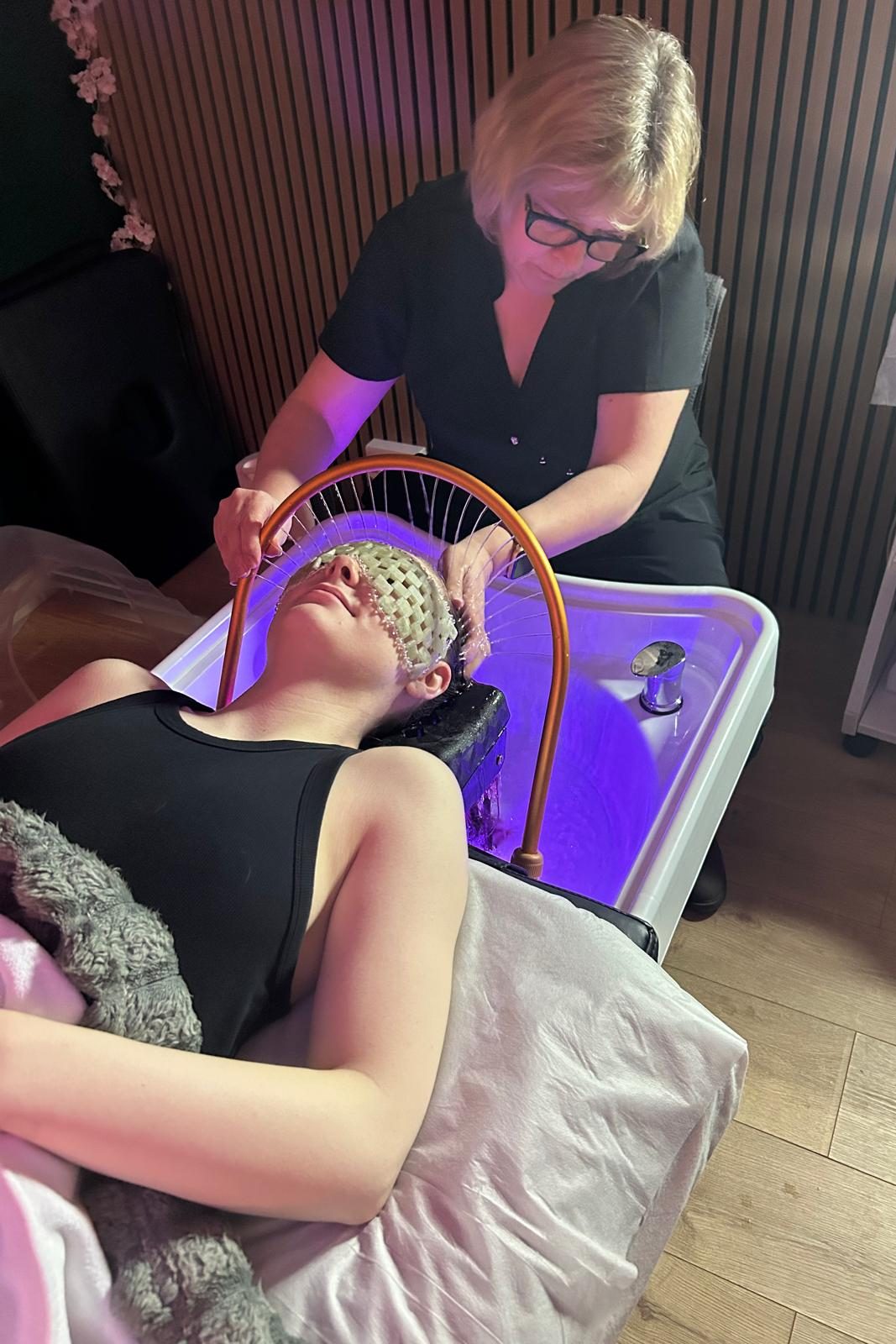
Head spa hygiene isn’t only about a Halo that looks clean and a fresh towel on the treatment bed. It’s about what’s happening inside the system — in the water path, the seals, the internal components — between one client and the next. That distinction matters more than ever, because head spa treatments have moved from niche discovery to must-book status almost overnight. Forbes recently valued the global wellness economy at more than five trillion dollars and named the Japanese head spa one of its fastest-growing categories, with client interest reportedly stretching from Tokyo to London to Los Angeles. Independent salon trend forecasts for 2026 list head spa rituals among the treatments clients are actively seeking out this year.
With that growth comes scrutiny. Clients booking a head spa treatment are, often for the first time, having warm water recirculated close to their scalp for twenty minutes or more — and increasingly, they’re asking what happens to that water and that equipment when they’re not in the chair. It’s a fair question. And it’s the one we spend more time answering than almost anything else in our training rooms — not massage technique, not product knowledge, but hygiene.
We hear a version of the same story often. A salon owner is confident their hygiene routine is “basically fine” — until a client mentions, gently, that the treatment area smelled slightly different from their last visit. Nothing was technically wrong. The Halo had been wiped down, the towels were fresh. But the internal system hadn’t had a proper weekly flush in over a week, because the person who usually handled it had been on annual leave and nobody else had been shown that step. It’s rarely negligence. It’s almost always a gap in the routine, not the intention — which is exactly why the routine has to be written down, not just understood.
This is the conversation we have with salon owners and therapists every week, whether they trained with us five years ago or five weeks ago. Here’s what we tell them, the reasoning behind it, and the products that make each step straightforward — because a routine only sticks when people understand why it exists, not just that it’s on a checklist.
At a Glance
- Warm, recirculating water needs a three-layer hygiene routine — not a single wipe-down.
- Left standing overnight, water in a Halo or tank becomes exactly the environment bacteria need to multiply.
- Not every antimicrobial product is safe for internal head spa components — formulation matters as much as frequency.
- What clients can’t see during their treatment is often what determines whether they rebook.
How Often Should You Actually Be Cleaning a Head Spa Unit?
There isn’t one answer to this — there are three, and treating them as interchangeable is the single most common gap we see in salons, including well-run ones. A head spa unit needs attention at three distinct points: between every client, at the end of the day, and once a week for a deeper internal reset. Skip the first and bacteria has a head start with the next booking. Skip the second and whatever’s built up during the day sits in the system overnight. Skip the third and mineral scale and product residue accumulate somewhere a daily wipe-down was never designed to reach. Most hygiene issues we’re asked to help troubleshoot come down to one of these three layers being missed — not all of them at once.
Cleaning, Disinfecting and Sterilising Aren’t the Same Thing
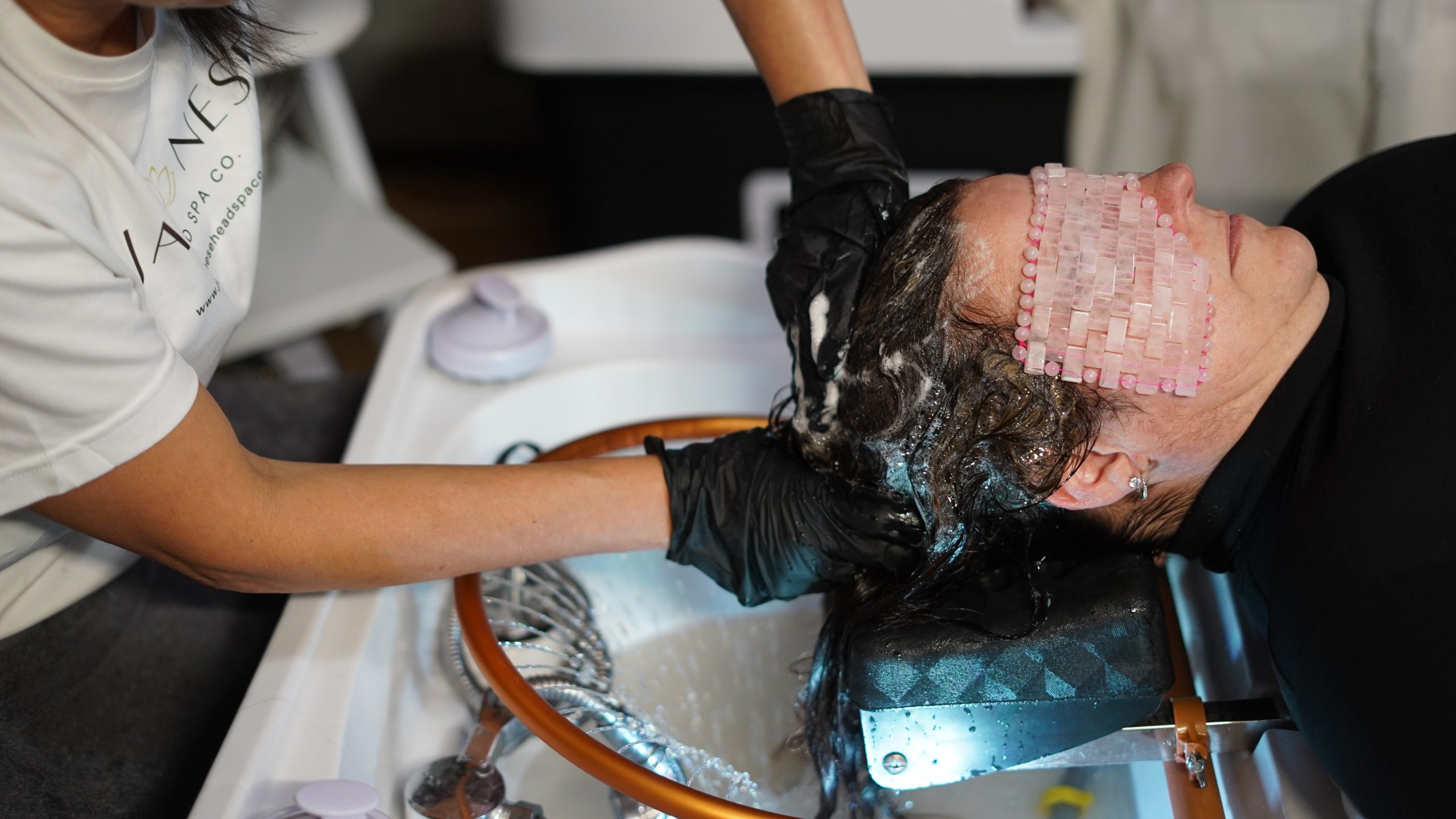
These three words get used interchangeably in most salons, but they describe three different levels of protection, and knowing the difference changes how you build a routine. Cleaning is the physical removal of dirt, oil and organic residue — it doesn’t necessarily kill anything, it just takes the material away. Disinfecting reduces the number of microorganisms on a surface to a level generally considered safe, usually within a short contact time. Sterilising goes further still: it aims to eliminate essentially all microbial life, and it typically depends on a specific concentration and a specific contact time to actually work, not just a quick spray.
That third category is why a Halo cycle-clean is treated differently to a surface wipe. A dedicated cleaning and sterilising solution, correctly diluted and run through a full cycle, is doing a different job to a disinfectant spray on a worktop — and one can’t simply substitute for the other, however thorough it feels in the moment.
A quick rule of thumb: if it touches a worktop, tool or trolley, it needs disinfecting. If it forms part of the internal water path — the Halo, the tank, the circulation system — it needs a proper sterilising cycle, run to the full recommended time, not shortened because the salon is busy.
What’s Actually Happening Inside the Unit Between Clients
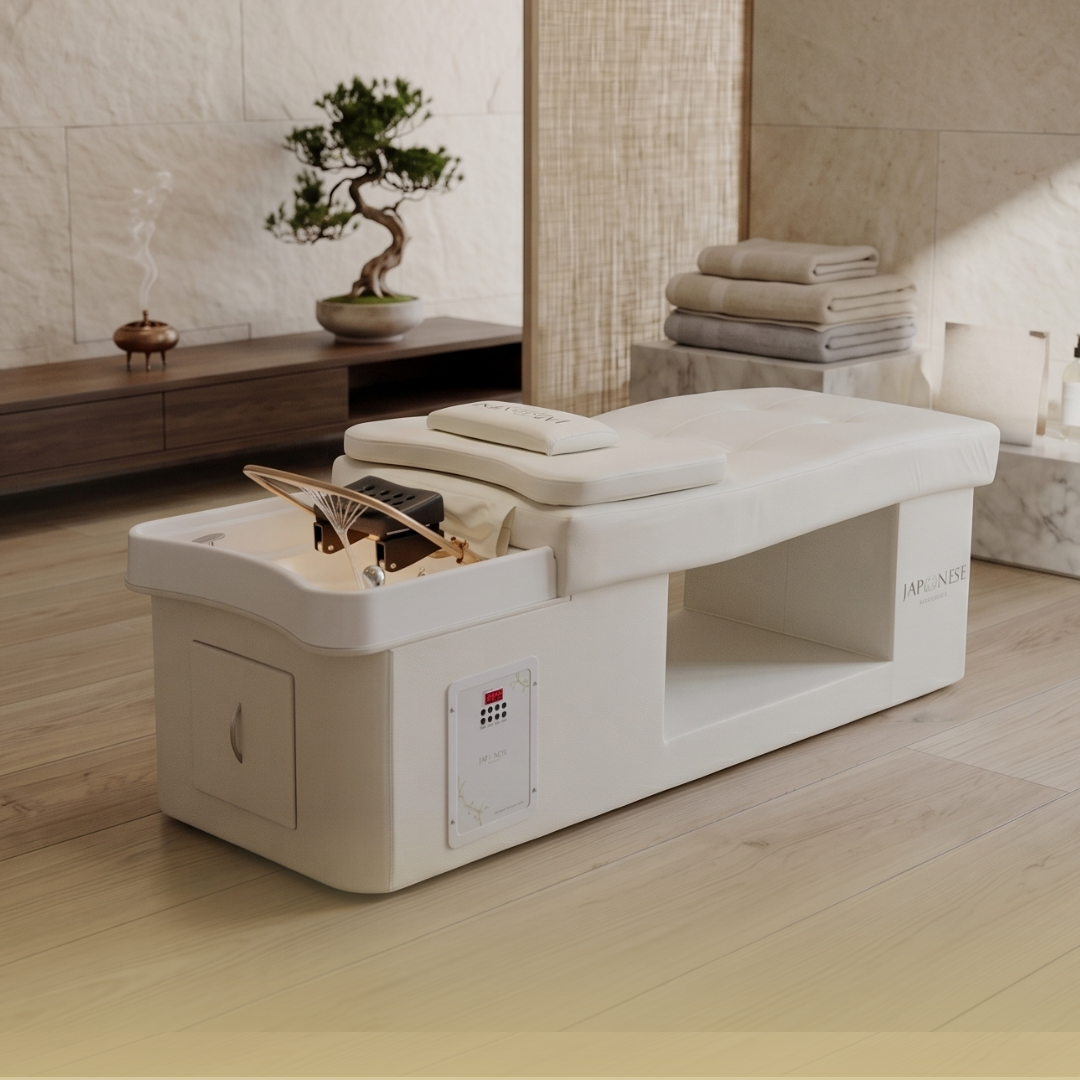
Every treatment leaves something behind in the water path — natural oils, conditioner and mask residue, dead skin cells, and mineral scale from the water supply itself, which builds up faster in hard-water regions than most salons expect. On their own, small amounts of any of these are unremarkable. The problem is what happens when they’re allowed to sit, undisturbed, in warm water.
Microbiologists describe this build-up in terms of biofilm: colonies of bacteria that anchor themselves to a surface and produce their own protective layer around themselves. Biofilms form fastest precisely in warm water that isn’t moving — which describes a head spa tank or Halo left standing overnight almost exactly. Once a biofilm is established, it’s considerably harder to remove than bacteria sitting loose on a surface you can simply wipe.
That’s the science behind a rule that can otherwise sound like an arbitrary instruction: never leave water sitting in the tank or basin overnight. It isn’t caution for its own sake — it’s the single easiest way to stop a resistant biofilm from ever taking hold in the first place.
Why This Matters Beyond the Treatment Room
It’s worth being precise here, because we’d rather give you the accurate picture than a scarier one. A head spa Halo isn’t legally classified as a spa pool, and HSE’s specific spa-pool guidance doesn’t apply to it in the same way. But every UK employer carries a general duty, under health and safety law, to assess and manage the risk of Legionella in any water system they operate — and the biology involved doesn’t distinguish between a hot tub and a treatment Halo. Both involve warm, recirculating water.
In 2022, the UK Health Security Agency recorded 503 laboratory-confirmed cases of Legionnaires’ disease, with leisure and hospitality settings repeatedly identified in outbreak investigations. That’s not a reason to be alarmed about a well-maintained head spa unit. It’s the reason a documented routine, rather than an assumed one, is worth having — and it’s a five-minute habit once it’s in place, not a compliance burden.
The Business Case: What Happens When Hygiene Slips
There are more than 61,000 hair and beauty businesses operating across the UK, according to the National Hair & Beauty Federation, and the vast majority employ fewer than ten people. That’s a crowded market, and head spa is one of the fastest ways for an independent salon to stand out — which also means hygiene is fast becoming a differentiator rather than a background detail. More than eight in ten salon clients say cleanliness is one of the biggest factors in deciding where they book, according to Statista research, and a head spa client is arguably paying closer attention than most, given how intimately the treatment involves them.
There’s a practical side to this too. Public liability and professional indemnity insurers increasingly ask for evidence of a documented hygiene routine for any treatment involving recirculating water — not just a verbal assurance that the salon “cleans regularly.” If a claim is ever made, it’s usually the first thing they want to see. And beyond the paperwork, head spa clients tend to become some of the most loyal, highest-frequency bookings a salon has — which means the cost of losing one over a hygiene concern is rarely just the value of that single appointment.
“We see hygiene gaps most often with experienced therapists, not new ones. Confidence with a treatment can mean the hygiene step becomes automatic rather than deliberate — and that’s exactly when small shortcuts creep in, like leaving the tank half-full overnight because tomorrow’s first client is already booked in. The routine has to survive a busy Saturday, not just a quiet Tuesday.”
Maria Cramp, Head Trainer & Co-Founder, Japanese Head Spa Co.
A Framework That Works in Practice
This is the structure we teach on every accreditation course, built around the three layers already mentioned. It’s the same framework whether you’ve got one Halo or five.
Between Clients
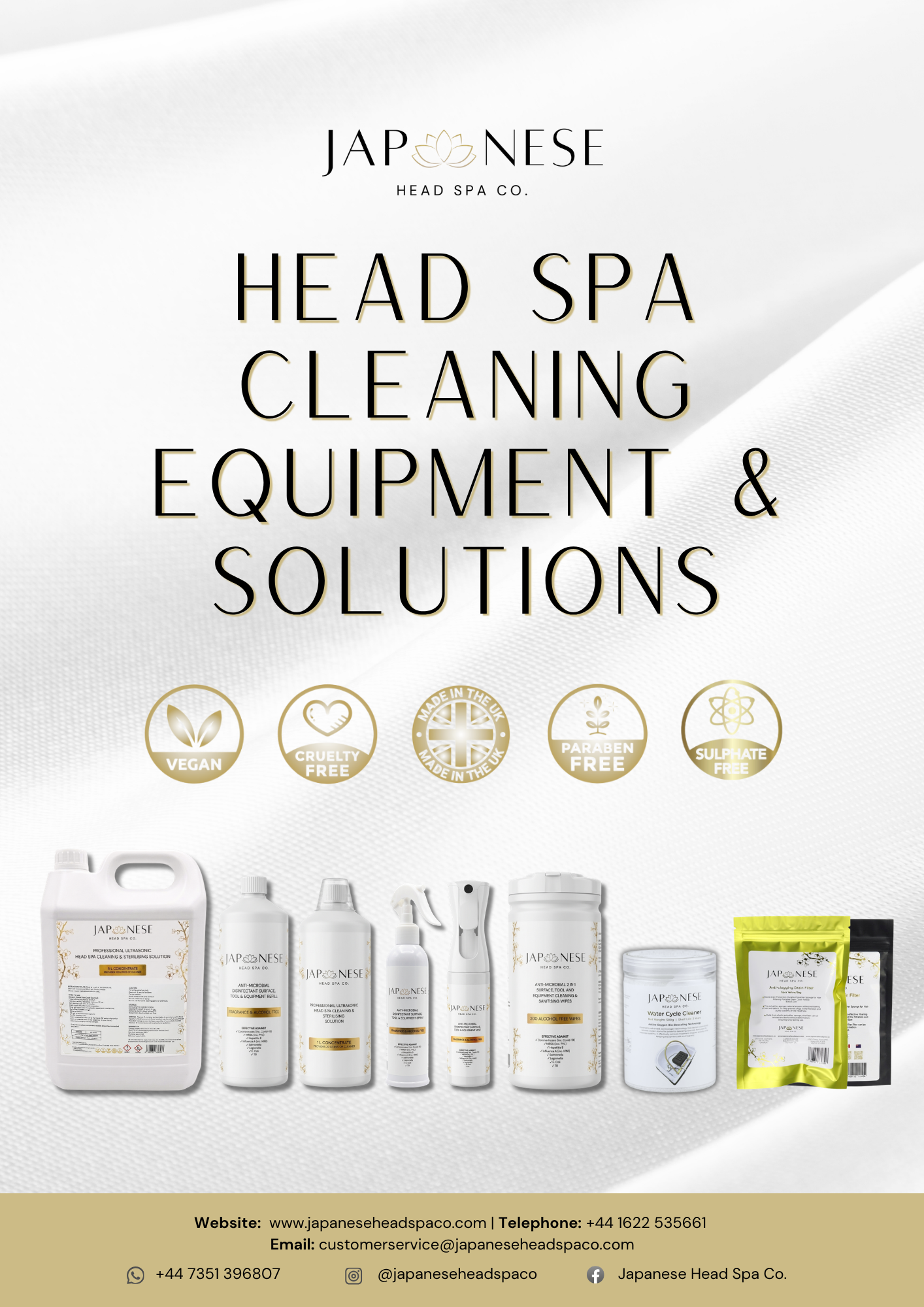
An internal cycle-clean of the Halo using a proper sterilising concentrate, run for the full recommended cycle, plus surface and tool disinfection using an alcohol-free formulation so pumps and seals aren’t degraded by repeated daily contact. A common mistake is reaching for a general-purpose alcohol-based salon disinfectant — fine on a worktop, but capable of shortening the working life of internal components over time.
-
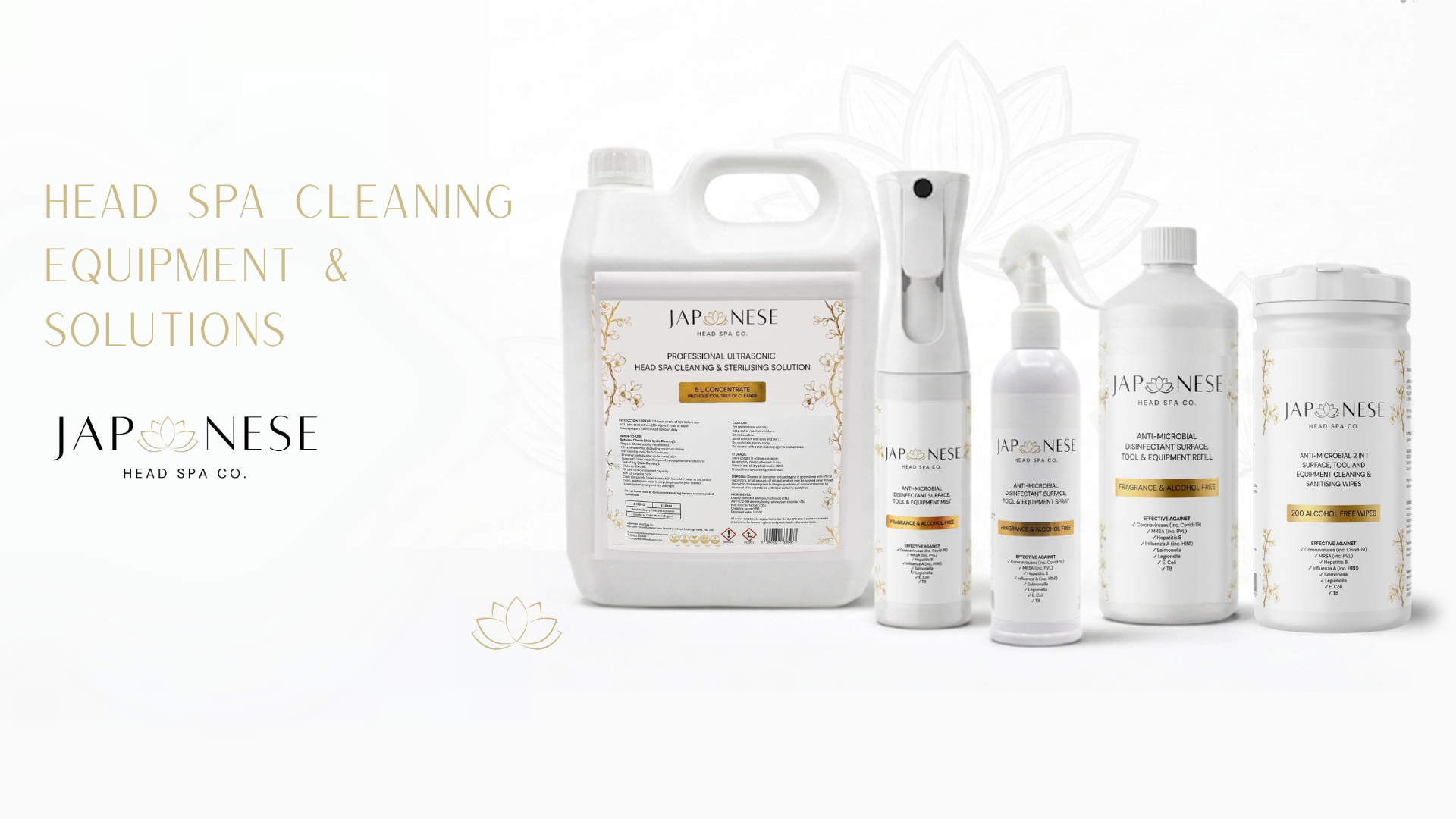
Professional Ultrasonic Head Spa Cleaning and Sterilising Solution 1Ltr (Concentrate)
£29.99 inc. VAT -
Professional Ultrasonic Head Spa Cleaning and Sterilising Solution 5Ltr (Concentrate)
£129.99 inc. VAT — currently sold out, higher-volume salons -
Anti-Microbial Disinfectant Surface, Tool & Equipment Spray 250ml
£19.99 inc. VAT -
Anti-Microbial Disinfectant Surface, Tool & Equipment Spray 1Ltr Refill
£29.99 inc. VAT -
Anti-Microbial 2-in-1 Surface, Tool and Equipment Cleaning & Sanitising Wipes x 200
£24.99 inc. VAT — useful for quick touch-ups between the spray and the next cycle
End of Day
A full flush through the tank, showerhead and internal circulation, complete drainage — never left standing — and an overnight-leave antimicrobial mist that isn’t wiped off, forming a protective layer until the next morning. This is the step most likely to be rushed at the end of a long day, and the one most worth protecting.
Weekly
A dedicated internal descale cycle to lift mineral build-up and product residue that daily cleaning isn’t designed to reach, run alongside a filter check. Treated as a scheduled safeguard, not a daily habit — put it in the diary the same way you’d schedule a stock check.
-
Head Spa Unit Water Cycle Cleaner – 500g
£29.99 inc. VAT — currently sold out
Choosing the Right Tools for Your Unit Type
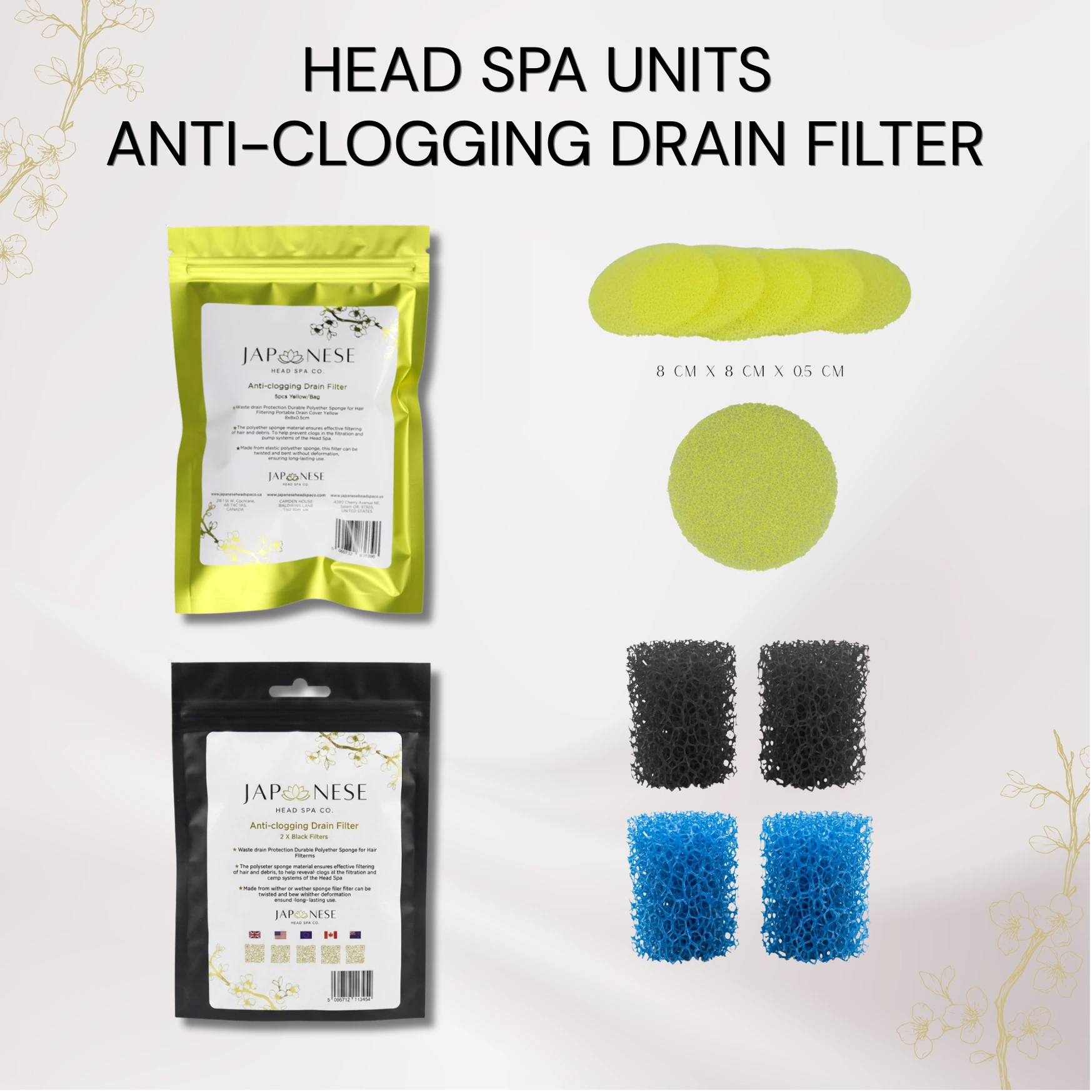
Plumbed and non-plumbed units don’t need different cleaning chemistry, but they do need different drain filters, and this is a detail we see missed even in otherwise well-maintained salons. Drain filters trap hair, product build-up and debris before it reaches the pump and filtration system. Left unchecked, a clogged filter doesn’t just slow drainage — it forces water to sit longer than it should, which brings us straight back to the biofilm conditions covered earlier.
| Unit Type | Filter | Check Frequency |
|---|---|---|
| Non-plumbed | 5x yellow elastic polyether sponge filters | Weekly, alongside the internal descale |
| Plumbed / hybrid | 2x black or blue elastic polyether sponge filters | Weekly, alongside the internal descale |
Both filter types are reusable and easy to clean by hand between replacements — they don’t need to be thrown away at the first sign of use, just checked as part of the weekly routine.
-
Anti-Clogging Drain Filter — Non-Plumbed Units (5x Yellow Filters)
£9.99 inc. VAT -
Anti-Clogging Drain Filter — Plumbed & Hybrid Units (2x Black/Blue Filters)
Available directly from our customer service team
Keeping a Simple Hygiene Log
A written log doesn’t need to be complicated to be useful. It needs to exist, be dated, and be quick enough that nobody skips it on a busy day. Most salons we work with keep something close to this, printed and pinned near the unit or built into a simple spreadsheet:
| Date | Between-Client Cycles | End-of-Day Flush | Weekly Descale | Initials |
|---|---|---|---|---|
Print a blank version of this, or build it into whatever booking or stock system you already use. The value isn’t the document itself — it’s what having one does to a routine. A step someone has to initial gets done far more consistently than a step someone is simply trusted to remember. For the full step-by-step version of this framework, see our Head Spa Hygiene Protocol page.
Frequently Asked Questions
How often should a head spa unit be cleaned?
At three points: an internal cycle clean between every client, a full system flush at the end of the day, and a deeper internal descale once a week.
What’s the difference between cleaning, disinfecting and sterilising?
Cleaning physically removes dirt and residue. Disinfecting reduces microorganisms on a surface to a safe level. Sterilising aims to eliminate essentially all microbial life and depends on a specific dilution and contact time to work properly — which is why a full Halo cycle can’t be shortened without losing its effect.
Can I use standard salon disinfectant on a head spa unit?
You can, but it’s worth checking the formulation first. General-purpose alcohol-based sprays are effective on worktops and tools, but repeated daily contact can degrade the seals and pump components inside a circulating system faster than an alcohol-free, fragrance-free antimicrobial formulation designed for that purpose.
Is it dangerous to leave water in a head spa tank overnight?
Yes. Warm water that isn’t moving is the exact environment bacteria need to multiply, and biofilms that form overnight are considerably harder to remove than surface bacteria wiped away during the day. Tanks should be drained completely and left dry.
Do plumbed and non-plumbed units need different maintenance?
The cleaning chemistry is the same, but the drain filters differ — non-plumbed units use a set of five yellow filters, while plumbed and hybrid units use two black or blue filters. Both should be checked weekly alongside the internal descale.
How do I know if my unit has a hidden biofilm problem?
Common signs include a faint odour that returns quickly after cleaning, slightly discoloured water, or a gradual drop in water pressure or flow. None of these are urgent emergencies, but they’re a clear signal to bring forward the weekly descale rather than wait for the scheduled day.
Do I need a written hygiene record for insurance purposes?
Many insurers expect to see a documented cleaning routine for treatments involving recirculating water, particularly if a claim is ever made. A dated log is a small habit that carries real weight.
What’s the difference between daily cleaning and a weekly descale?
Daily and end-of-day routines manage bacteria and visible residue in the water path. A weekly descale targets mineral scale and product build-up deeper inside the internal system that daily cleaning alone isn’t designed to reach.
Hygiene is the part of a head spa business clients never see and always feel. If you’re building or refining your salon’s routine, it’s the first thing our Head Trainer team covers on every accreditation course.
Get in touch and we’ll talk it through, or browse the full Hygiene Protocol and product range.
Japanese Head Spa Co. — Training, equipment and hygiene standards for professional head spa businesses across the UK, Ireland, Canada, New Zealand and the USA.
Why This Makes Us Different
We’re proud to say it plainly: Japanese Head Spa Co. offers a complete, structured cleaning system engineered specifically for every stage of the professional head spa day — daily, end-of-day and weekly — built around the unique demands of ultrasonic head spa equipment, not repackaged from generic salon disinfectant.
It’s the product of years spent training and equipping head spa practitioners across the UK, Europe, the USA, Australia and New Zealand.
“From the very beginning, we never wanted to be a brand that just sold equipment and left professionals to figure the rest out on their own. Being able to say we’ve built the only complete hygiene system for this industry — end to end, tested, and genuinely trusted — is exactly the kind of standard we set out to lead when we started this business. That’s what pioneering actually looks like to us.”
Nicola Simpson — Co-Founder, Japanese Head Spa Co.
When you choose it, you’re not just buying a product. You’re closing the exact gap that industry research shows most of this profession still hasn’t addressed — and giving your clients a reason to trust you that they may never see, but will always feel.
The Proof Behind the Promise
We understand the position you’re in. You’re not just deciding what to put on a shelf — you’re deciding what to put your name behind, in front of every client who trusts you. So we’ve never believed “antibacterial” should be a word we simply print on a label. It should be a claim you can actually verify.
That’s why every product across our Daily, End-of-Day and Weekly system is independently tested to meet recognised EN hygiene standards:
Independently Tested To Meet
✓ EN14476 — Virucidal activity (including Coronaviruses)
✓ EN1276 & EN13727 — Bactericidal activity
✓ EN13624 & EN1650 — Fungicidal & Yeasticidal activity
✓ EN14348 — Mycobactericidal / Tuberculocidal activity
In practical terms, that means proven effectiveness against the pathogens that matter most in a treatment room:
Coronaviruses (COVID-19), MRSA (incl. PVL), Hepatitis BInfluenza A (H1N1), Salmonella, Legionella, E. coli, TB
And because protecting your clients should never mean compromising what you stand for, every product in the range is vegan, cruelty-free, paraben-free, sulphate-free, and made in the UK. No shortcuts on safety. No shortcuts on ethics either.
You can explore the complete system in detail — including the full 3-Step Routine this Head Spa Hygiene Cleaning range is built around — on our Head Spa Cleaning Products page.
A Cleaning Range Is Only Part of How We Support You
Hygiene is where this problem starts, but it’s rarely where a head spa business’s questions end. That’s why our cleaning system doesn’t exist on its own — it sits alongside CPD-accredited training, professional-grade plumbed and non-plumbed equipment, and ongoing support from a team who are only ever a message away, long after your course or your order is complete.
Whichever part of your business you’re building right now — your first treatment room, your team’s training, or the routines that protect it all — we’re built to support the whole journey, not just one product on a shelf.
To Every Head Spa Professional Reading This
We know what it takes to run this business. The early starts. The back-to-back appointments. The quiet pressure of wanting every single client to leave feeling better than when they arrived — and the worry, even if you never say it out loud, of whether you’re truly doing enough behind the scenes.
We built this system for you. Not because head spa hygiene should be one more thing to worry about, but because it shouldn’t have to be a worry at all — just a routine you trust completely, backed by proof rather than promises, so you can focus on what you do best: making people feel cared for.
That’s the business we’re all in, together. And we’ll keep building for you — one honest, tested, genuinely trusted product at a time.